
IT innovation: The digital era

Share
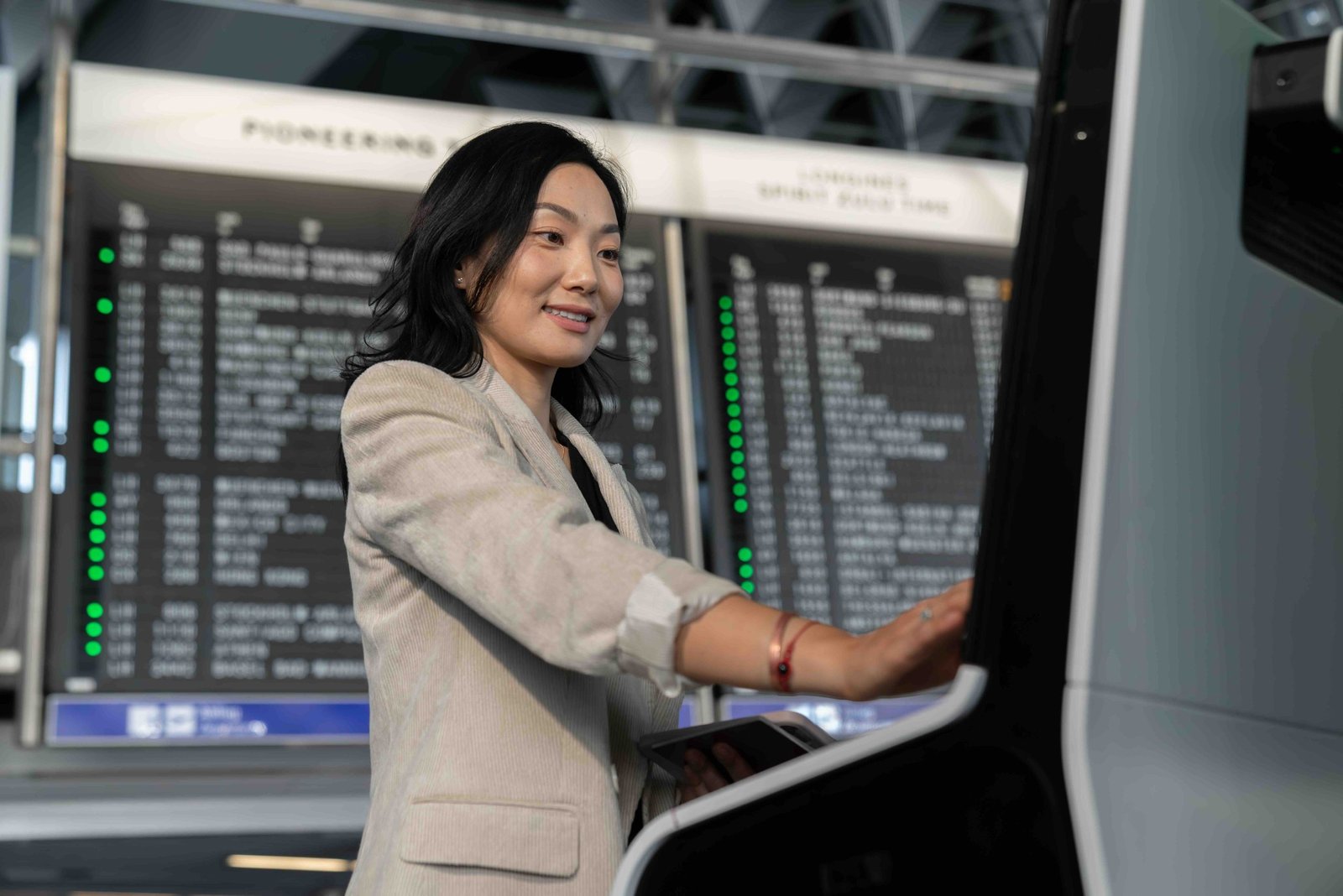
Sumesh Patel, SITA’s president for Asia Pacific, considers some of the technologies that will transform the passenger experience at airports in the decades to come.
The air traveller journey is entering its most profound transformation in decades, and across the Asia-Pacific region, airports face an unrelenting challenge of having to serve record numbers of travellers with infrastructure and workforces that are unable to keep pace.
The solution is no longer found in incremental tweaks. Instead, it lies in reimagining the journey as a connected network – where people, processes, and places work in concert.
THE EVOLVING IMPERATIVE
Airports are reaching a tipping point. Passenger volumes continue to rise, but resources and space remain finite. According to ACI-ICAO’s joint passenger traffic report, global passenger traffic is forecast to exceed 12 billion by 2030, driven by growth in international markets, particularly in the Asia Pacific and Middle East regions.
This scale of growth leaves little room for incremental fixes; it demands a wholesale rethink of how journeys are managed.
Responding to these pressures, the industry is prioritising technologies that deliver faster, more efficient passenger processing.
SITA’s latest Air Transport IT Insights Report shows 63% of airports are prioritising self-service, biometrics, and mobile-first platforms, and 75% of airlines plan to implement biometric-enabled processes by 2027, signalling a future where secure, touchless tech is expected rather than exceptional.

Beyond these front-end capabilities, generative AI, computer vision, and machine learning are being scaled to support predictive resource planning and real-time disruption management.
Underpinning all of this is the need for strengthened IT infrastructure and robust cybersecurity so that these tools run on secure, future-ready platforms. The real challenge then lies in aligning them into a coherent, end-to-end experience.
FRICTION TO FLOW
For most travellers, the quality of an airport experience is defined at its slowest points – the check-in queue, the security lane, the immigration counter, the boarding gate.
These are the moments where operational strain is most visible, and where perception of the entire journey can be made or broken.
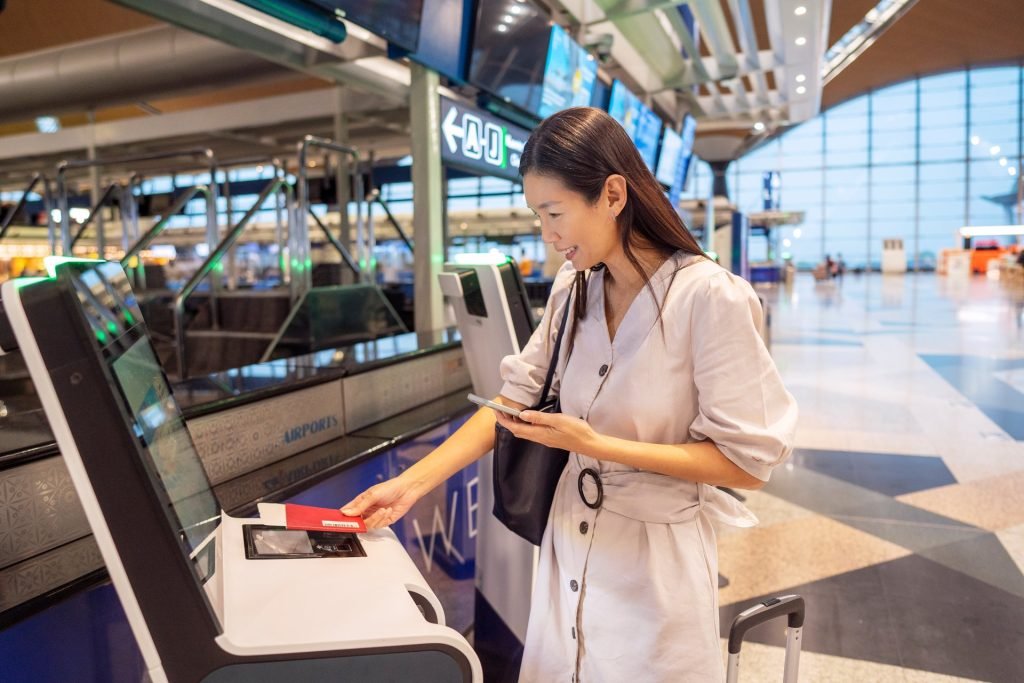
Across the industry, new approaches are replacing these choke points with smoother, faster transitions. Biometric identity systems are increasingly deployed at major hubs, enabling passengers to move through touchpoints with little more than a glance.
At airports such as Beijing Capital (PEK), Bangkok Suvarnabhumi (BKK), and Singapore Changi (SIN), these solutions are already in use, cutting processing times while maintaining robust security.

Cloud-based platforms are also reshaping what is possible. They make it feasible to check in from almost anywhere and allow operators to adjust resources on the fly. The real transformation comes when these systems can work together, securely exchanging data across airlines, airports, and government agencies, giving AI the depth of information it needs to anticipate and manage passenger flows in real time.
No longer experimental, these proven tools are scaling quickly and redefining the pace and rhythm of the passenger journey.
SEAMLESSNESS IS PHYSICAL, TOO
Yet technology alone cannot deliver a journey without friction. The physical environment must work hand in hand with the digital to achieve it. Passenger experience is influenced as much by the spaces travellers move through as by the systems guiding them.
Today, AI-driven simulation and modelling tools allow airports to test terminal layouts before construction begins, optimising for passenger flow and preventing choke points before they appear.
When digital systems and physical design are aligned from the outset, terminals transform from static spaces into responsive environments that adapt dynamically to passenger needs and operational realities.
Scaling this vision across the industry, however, is another matter. For every airport pushing the boundaries of technology and design, many others face entrenched obstacles – systemic, regulatory, and operational – that can slow or even stall progress.
CHALLENGES TO INDUSTRY-WIDE PROGRESS
The leap from individual success stories to industry-wide adoption is where the real work begins. Fragmented systems, uneven readiness, and diverse regulatory demands still stand in the way.
At the heart of these challenges is data sharing. Passenger information is deeply personal, and the stakes for mishandling it are high.
Privacy laws such as the General Data Protection Regulation (GDPR) in Europe and the California Consumer Privacy Act (CCPA) in the United States set strict rules for how personal data can be collected, stored, and exchanged.
Security risks only heighten the challenge, as even a single breach can damage trust for years and derail progress.
Commercial sensitivities also play a role. For some stakeholders, passenger data represents a competitive advantage, a proprietary asset to be guarded rather than pooled. This reluctance limits the potential of AI-driven analytics, which depend on large, connected datasets to deliver meaningful insights.
Closing these gaps will require more than goodwill. It demands agreed standards, trusted frameworks, and secure exchange protocols that protect privacy while enabling collaboration.
This is where AI-enabled anonymisation offers a pathway forward, allowing data to flow without exposing individual identities – a critical step if the vision of seamless travel is to extend beyond isolated projects and become the industry norm.
While challenges remain, the gap is narrowing, particularly where public–private partnerships, shared frameworks, and scalable platforms are in play. Together, these efforts are creating pockets of seamless travel that are gradually connecting to offer a unified experience.

Young woman with suitcase looking away while working on her laptop at the airport.
A CONNECTED FUTURE WITHIN REACH
What was once a patchwork of isolated successes is starting to take shape as a cohesive system. A biometric gate here, an off-airport check-in there, a new data-sharing agreement between airport and immigration – each advancement lays another brick in the foundation of a truly integrated journey.
AI acts as the connective tissue, learning from every interaction to refine processes and anticipate needs. This turns facilitation from a chain of discrete checkpoints into a continuous, responsive experience.
Across Asia-Pacific, the building blocks are already in place; the task now is to weave them into a continuous, uninterrupted flow.
The future of passenger journeys will be defined by how well the industry connects its people, processes, and places.
Rising demand and finite resources and space set the challenge, while the rapid adoption of AI, biometrics, and integrated infrastructure offers the answer.
This progress will come not through isolated projects, but through the deliberate stitching together of technology, design, and partnership. Airports that act now will not just meet the expectations of tomorrow’s passengers; they will define them.