
Top technology priorities

Share
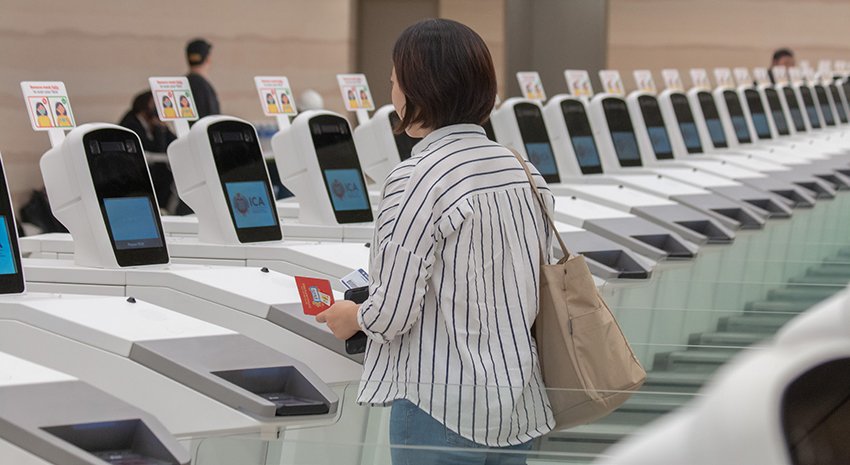
Rudy Daniello, Amadeus’ executive vice president of airport and airline operations, highlights some key technology investment trends.
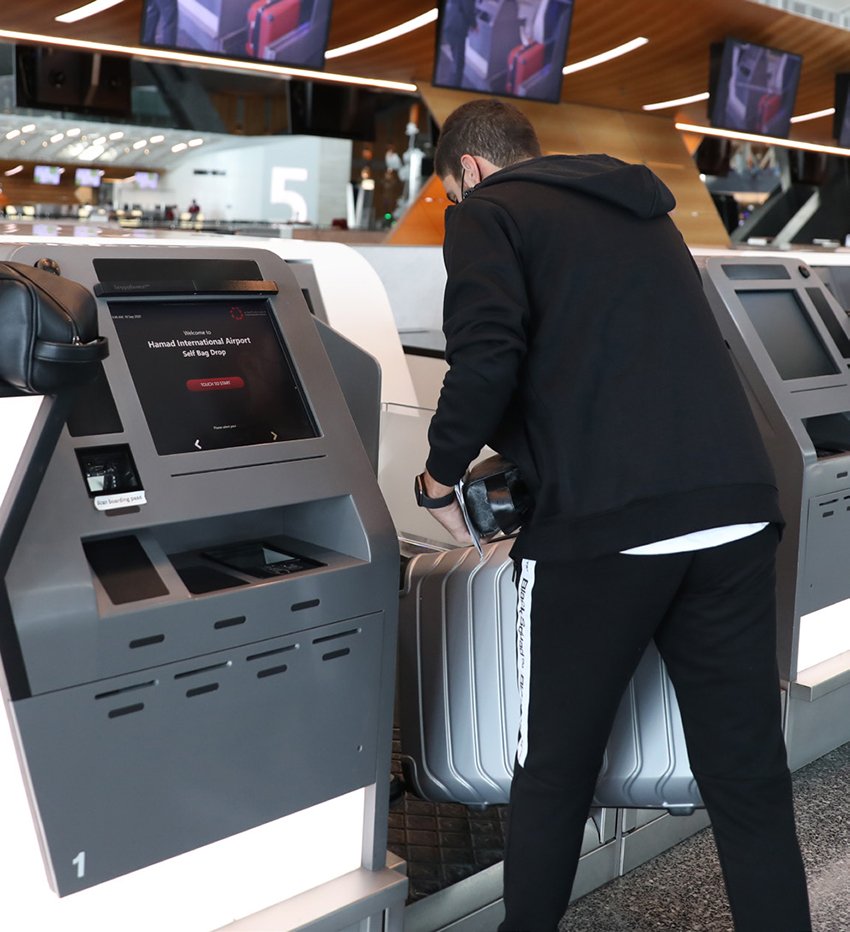
Our latest research, Travel Technology Investment Trends 2024 Airports, demonstrates that self-service is now mature, with more than half of the airports we surveyed providing self-service at check-in, bag-drop, and boarding.
But what does the future hold? And where are airport leaders investing to deliver future improvements in passenger services and operations?
According to our study, which interviewed 50 senior technology leaders from airports around the world as well as 1,100 respondents from other parts of the travel industry, 92% of airports plan to invest ‘the same or more’ in technology this year, with budgets set to rise by 17% on average over the coming twelve months.
We also asked this same question to other areas of the travel industry, and nowhere are budgets set to rise as much as at the terminal. For example, airlines and travel agencies will both increase investment by 13% on average, hotels by 14% and corporate travel departments by 15%.
Why are airports investing more?
Airport leaders told us that technology investments are happening with several different objectives in mind.
A desire to improve the passenger experience was most frequently cited (56%), followed by improving operations (52%), and operating more sustainably (52%), but other less obvious objectives scored highly, too, like moving to the cloud (46%), collaborating more closely partners like airlines (40%) and reducing and mitigating the impact of disruption (30%).
This mixed picture highlights the multiple different challenges airports currently face. There is a need to balance long-term aspirations to deliver a competitive passenger experience that attracts airlines and delivers for travellers with a need to improve operations, particularly in disruption scenarios.
At the same time, airports face a growing need to improve sustainability. These priorities likely explain why airports are increasing investment more than other areas of the industry; there’s a lot of work to do.
Which technologies hold the greatest promise for airports?
The world is undergoing a period of rapid technological development as breakthroughs in fields like AI, fintech and cloud computing begin to make a tangible impact on how business is conducted.
These technologies are increasing automation, improving decision-making and supporting new customer experiences in every sector, from banking to automotive but certainly in aviation, too.
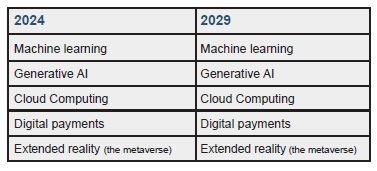
We asked airport leaders to choose which technologies they felt would have the biggest impact this year and over a five-year horizon, from a list of fifteen options. Perhaps, unsurprisingly given the long-term nature of airports, leaders selected the same top five technologies over both time horizons.
Machine Learning
The technology expected to make the biggest impact at the airport is machine learning. This makes sense as machine learning is increasingly being embedded within most software products to improve the quality of automated decision-making and recommendations.
At Amadeus, machine learning powers our suite of airport operations technology that crunches vast amounts of data to, for example, recommend optimal aircraft take-off sequences to improve efficiency and reduce unnecessary fuel burn.
Also, it’s used in our solution that takes complex decisions on how best to allocate shared resources like stands and gates based on demand and schedules.
But these examples are just the tip of the iceberg for machine learning at the airport. For example, we recently launched our Virtual Airport Operations Centre, which provides a single view of the health of an airport’s operations. The system is designed as an app within Microsoft Teams to ensure the operational plan and performance metrics can be easily shared and consumed.
Machine learning is vital to this innovation, ensuring that operations teams benefit from pro-active and predictive alerts. For instance, using data feeds from public transport, the system can foresee peaks in demand so airports can preemptively power-up more self-service resources and staffing levels before service quality is affected.
Machine learning is also the underlying technology behind computer vision, a field of AI that allows machines to derive meaningful information from digital images, videos and other visual inputs. This approach can help to automatically identify airside assets so they can be better managed.
Generative AI
Generative AI is a field of AI that can interpret human language and since the launch of high-profile services like Chat GPT has attracted significant attention. Whilst use cases for Generative AI at the airport are still emerging and arguably less obvious than machine learning, they do hold promise.
For example, we are working with partners including AI chip firm NVIDIA to develop interactive avatars for use at the airport. These prototypes can interpret natural language voice or text chat with travellers in 26 different languages to advise passengers about flight information or the airport’s services.
These avatars tend to be displayed within a kiosk and cameras mounted at the kiosk are able to identify the passenger’s demographics so the avatar’s appearance can change accordingly. For instance, if a child asks a question, then the avatar may resemble a child or a character from a computer game.
In the future, we envisage such digital assistants ‘transferring’ from the kiosk to the passenger’s mobile device so they can benefit from advice as they move around the terminal.
The AI model used can be trained on specific flight information, so it’s empowered to return accurate and customised information to the traveller.