View from the top

Share

Director general Stefano Baronci reflects on a busy and successful second quarter of the year for ACI Asia-Pacific & Middle East.
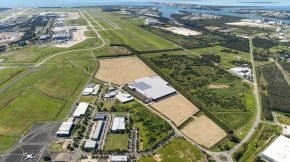
As we stand on the cusp of the next decade, a clear imperative emerges for the aviation industry: substantial investment in infrastructure.
The skies of Asia-Pacific and the Middle East are set to witness an unprecedented surge in passenger traffic, with projected annual growth rates of 7.8% and 8.1% respectively. This robust demand underscores an immediate and pressing need for development that not only keeps pace but proactively shapes the future of air travel.
Our recent Infrastructure Investment Survey (see more on pages 28 of this issue) on airport development, released in April, provides a compelling snapshot of this strategic focus.
Over 30 key airports, collectively representing around 30% of the total passenger traffic and 50% of cargo traffic in Asia-Pacific and the Middle East, indicated a strong emphasis on both modernising existing facilities and developing new airport infrastructure.
This dual approach is critical as air travel demand is set to triple by 2042, making expansion and modernisation more vital than ever for maintaining efficiency and safety.
The survey highlights the fact that airports across the Asia-Pacific and Middle East regions are projected to invest $240 billion on infrastructure development projects between 2025 and 2035.
This investment – as indicated in our latest survey – covers both the upgrade of existing facilities and the construction of new airports to support the growing demand in passenger and cargo capacity.
To underpin this extensive infrastructure expansion, appropriate adjustments to airport charges will be essential. This measure will enable airports to recover capital expenditure, uphold service standards, and accommodate future operational requirements.
Charges will have to be carefully balanced to ensure affordability for airlines and passengers, while securing continuous investment in critical infrastructure.
AIR CONNECTIVITY RANKING
As we completed the CAPEX Survey, we released the highly anticipated Air Connectivity Ranking at the highly successful Air Connectivity Conference 2025 in Shanghai.
The study (see more on pages 16-18) reveals that connectivity in both Asia-Pacific and the Middle East increased by a remarkable 14% in 2024, driven by strong international demand, robust network recovery, and the return of major travel corridors.
The ACI Asia-Pacific & Middle East Air Connectivity Ranking is a comprehensive, passenger-centric analytical tool developed in collaboration with PwC in 2023 and refined for its third edition in 2025.
In Asia-Pacific, intra-regional connections are nearly back to pre-pandemic levels, trailing by just 0.2%. At the same time, intercontinental connectivity is on the rise, showing a solid 4% increase. The Middle East, however, isn’t just recovering – it’s setting a new pace. Both intra-regional and inter-continent connectivity have not only bounced back but have exceeded pre-pandemic levels by a significant margin of 18% and 16%, respectively.
The Air Connectivity Conference itself, co-organised by China Civil Airports Association and hosted by Shanghai Airport Authority, was hugely successful, attracting over 150 participants from more than 20 countries.
CELEBRATING MILESTONES IN SUSTAINABILITY
Amid these challenges, the aviation industry’s commitment to sustainability stands as a notable success story.
In April 2025, our region achieved a new milestone – more than 100 airports participating in the Airport Carbon Accreditation programme, and this figure had risen to 115 airports by May 31. Between them, these airports collectively handle nearly 40% of the passenger traffic across Asia-Pacific and the Middle East, and achieving accreditation demonstrates the strong regional commitment to reducing carbon emissions.
Of the total, four airports from Asia-Pacific – three from India, Delhi (DEL), Bengaluru-Kempegowda (BLR) and Hyderabad (HYD) and one from New Zealand, Christchurch (CHC) – have achieved Level 5, the highest level of the programme.
Globally, there are 637 accredited airports participating in airport climate action across seven levels of the programme.
From an Asia-Pacific and Middle East perspective, we are very pleased to see this level of commitment from airports to reducing their carbon footprint and look forward to seeing even more airports join the programme as we strive to achieve the industry’s shared vision of achieving net zero emissions by 2050.
SUVA DECLARATION
At the 3rd Regional Aviation Ministers Meeting (RAMM) in Fiji, ACI Asia-Pacific & Middle East contributed to the development of the Suva Declaration 2025.
A key priority of the declaration is promoting environmentally sustainable aviation connectivity, including reducing carbon emissions, adopting cleaner fuels, and minimising the environmental impact of air travel.
As a follow-up, ACI APAC & MID will organise the second edition of Airport Day on September 18 and 19, 2025, in Auckland. Hosted by Auckland Airport, the event will support capacity-building for airport members in the Pacific and continue the dialogue with industry regulators on practical pathways to achieving the goals of the Suva Declaration.
REGIONAL ASSEMBLY, CONFERENCE, AND EXHIBITION
Our recent annual event in New Delhi marked another important milestone for ACI Asia-Pacific & Middle East as, during the event, our Board approved a revised Strategic Plan (2024–2026) to better align with industry trends and the evolving needs of our members.
A key focus of the updated plan is to enhance the analysis and communication of the economic and social value that airports generate at the national level.
NEW RESOLUTION
A standout moment from the Assembly was the unanimous adoption of a resolution by airport members, calling for the optimisation of existing capacity and the development of new infrastructure.
With projected air traffic growth of 7% annually over the next 25 years, this resolution supports the critical investments needed to meet demand and maintain long-term competitiveness.
ACI EXTENDS SUPPORT TO MYANMAR
Following the devastating earthquake in Myanmar, ACI Asia-Pacific & Middle East donated $50,000 to Airlink, a disaster logistics non-profit, to support urgent humanitarian relief efforts.
To further amplify support, we launched a member-wide fundraising campaign. Funds raised will help Airlink ensure the rapid delivery of emergency supplies and personnel to affected regions, providing crucial assistance to communities in need.