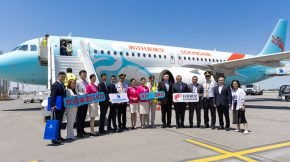
That winning feeling: Incheon International Airport

Share
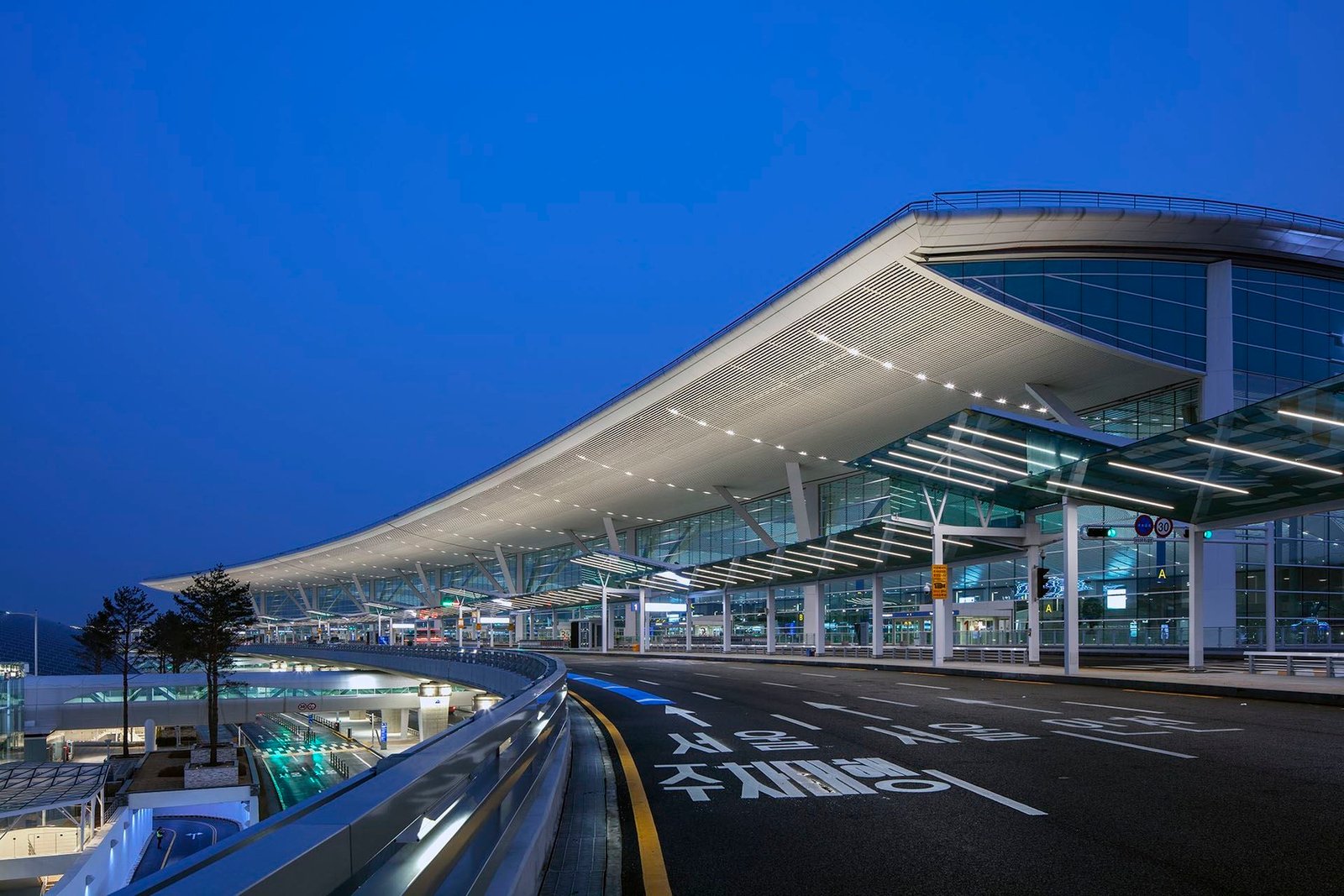
President and CEO, Hag-Jae Lee, talks to Joe Bates about the success, ambitions and future development plans of Incheon International Airport.
HOW WOULD YOU SUM UP YOUR FIRST TWO YEARS IN THE HOT-SEAT AT INCHEON INTERNATIONAL AIRPORT CORPORATION?
I have enjoyed it and, from day one, have felt deep gratitude for the rare opportunity to lead Incheon International Airport. My foremost priority was the rapid normalisation of airport operations that had been virtually halted due to the pandemic.
In 2024, we achieved a record 70.67 million international passengers, fully recovering pre-pandemic demand while minimising disruption to the aviation ecosystem.
Personally, I have been inspired by the dedication of our experts/people who built this world-class airport from what was once the open sea. As CEO, I will continue to do my utmost to ensure that our employees can enhance their expertise in their specialised fields and perform at their best.
REFLECTING ON THE YEAR-TO-DATE, WOULD YOU SAY 2025 HAS BEEN A GOOD YEAR FOR INCHEON?
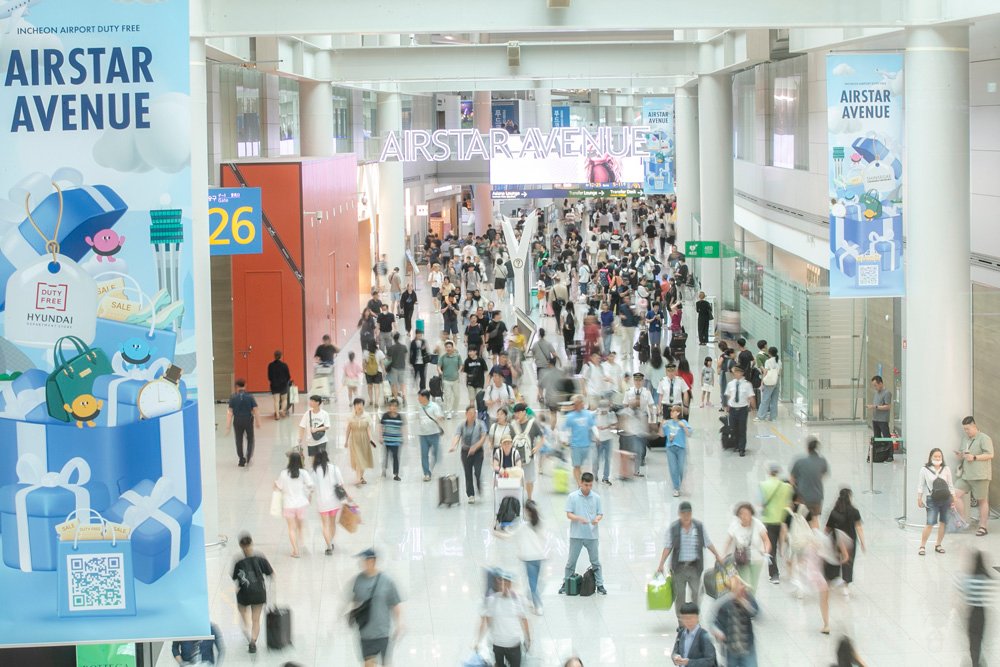
The first half of 2025 has been remarkable for two main reasons. First, despite persistent currency and oil price volatility, passenger traffic reached 36.36 million – the highest first-half figure in our history, surpassing the previous record of 35.5 million set in 2019.
Second, we officially announced our ‘Aviation AI Innovation Hub’ vision in March, which will effectively create new value for Incheon airport beyond traditional airport operations. Our goal is to establish an AI industry ecosystem within the airport that seamlessly integrates technology development, demonstration, and advancement in partnership with big tech, start-up companies, leading universities, and research institutes.
Our IA ambitions have led to Incheon becoming the first airport in Asia to officially join the Airports AI Alliance (AAA), a global co-operative network of leading airports and technology companies. This represents international recognition of our leadership and pioneering role in AI-driven airport innovation. We are committed to sharing AI technologies with the global community, furthering our vision of becoming an airport that changes the world.
Without wishing to overstate things, I believe these milestones mark 2025 as both a record-setting and future-defining year.
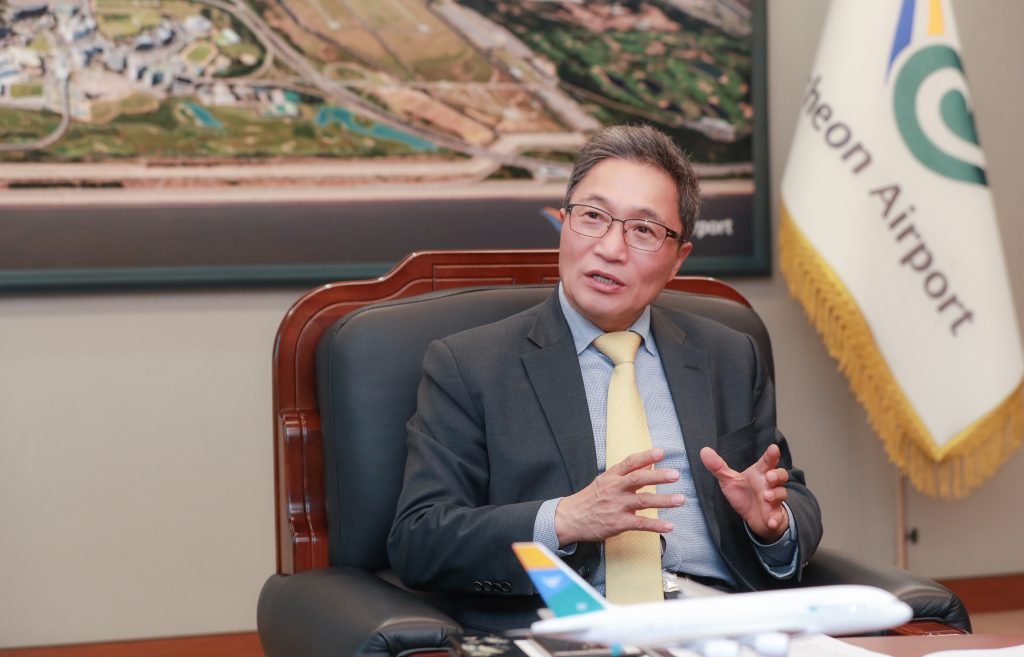
HOW MANY PASSENGERS DID THE AIRPORT HANDLE IN 2024 AND WHAT IS THE FORECAST FOR 2025 AND THE NEXT 5-10 YEARS?
We matched our best-ever annual total of 71.17 million passengers in 2024, equalling the performance of pre-pandemic 2019. The 2024 total included a record breaking 70.67 million international passengers, slightly more than the previous record of 70.58 million set in 2019. The upturn clearly demonstrates a full recovery in demand for air travel.
In the first half of 2025, passenger traffic increased by 6.1% compared to the same period in 2024. As a result, in 2025, we are projecting that our passenger volumes could reach between a conservative 73.06 million and an optimistic 76.3 million.
Positive factors include the temporary visa-free entry policies for Chinese group tourists, while uncertainties such as continued low economic growth and global conflicts may act as constraints. Over the next five years (2025–2030), the average annual growth rate is projected at 4.3%, primarily driven by the increase in outbound Korean travellers and LCC expansion. From 2025 to 2035, slower economic growth and demographic shifts may moderate growth to 3%, so we’d reach about 100 million passengers by 2032.
WHO ARE YOUR TOP FIVE PASSENGER AIRLINES AT INCHEON TODAY IN TERMS OF MARKET SHARE?
The top five airlines today in terms of passenger volumes are Korean Air (KE), Asiana Airlines (OZ), Jeju Air (7C), Jin Air (LJ), and T’way Air (TW). Notably, all five are Korean carriers, and together they account for 60.9% of all passengers passing through the airport.
Among them, the combined market share of Korean Air and Asiana Airlines (both full-service carriers) is 38.7%, while the low-cost carriers make up 22.2%. It should be noted that the airport primarily serves as a gateway for international flights, which is reflected in its five most popular routes to Tokyo, Osaka, Fukuoka, Bangkok and Hong Kong, which between them account for around 26% of our annual passenger volumes.
WILL INCHEON REQUIRE ANY NEW TERMINALS OR OTHER KEY INFRASTRUCTURE IN THE FUTURE TO COPE WITH TRAFFIC GROWTH?
Incheon completed its fourth phase expansion in 2024 and is now capable of handling 106 million passengers annually – nearly double its opening capacity of 54mppa.
In addition the airport is now equipped to accommodate up to 600,000 aircraft movements and 6.3 million tons of cargo annually – increases of 20% and 26% respectively on its opening day capabilities.
With globalisation and the continued growth in demand for global aviation, current projections indicate our Phase 4 facilities will reach capacity by about 2033.
We are aware of what needs to be done. With competition among Asian hubs continuing to increase, the timely expansion of Incheon’s capacity is critical for maintaining our hub competitiveness. Indeed, delays in expansion could result in congestion, operational inefficiency, higher fares, and the loss of transit traffic, thereby weakening both the airport and Korea’s competitiveness in the aviation sector.
Given that major airport developments typically take 8–10 years from planning to completion, it is essential to begin preparations now to ensure the timely delivery of additional infrastructure that will include a fifth runway, Terminal 3, new apron and aircraft parking areas.”
WHAT CARGO FACILITIES DOES INCHEON HAVE TODAY?
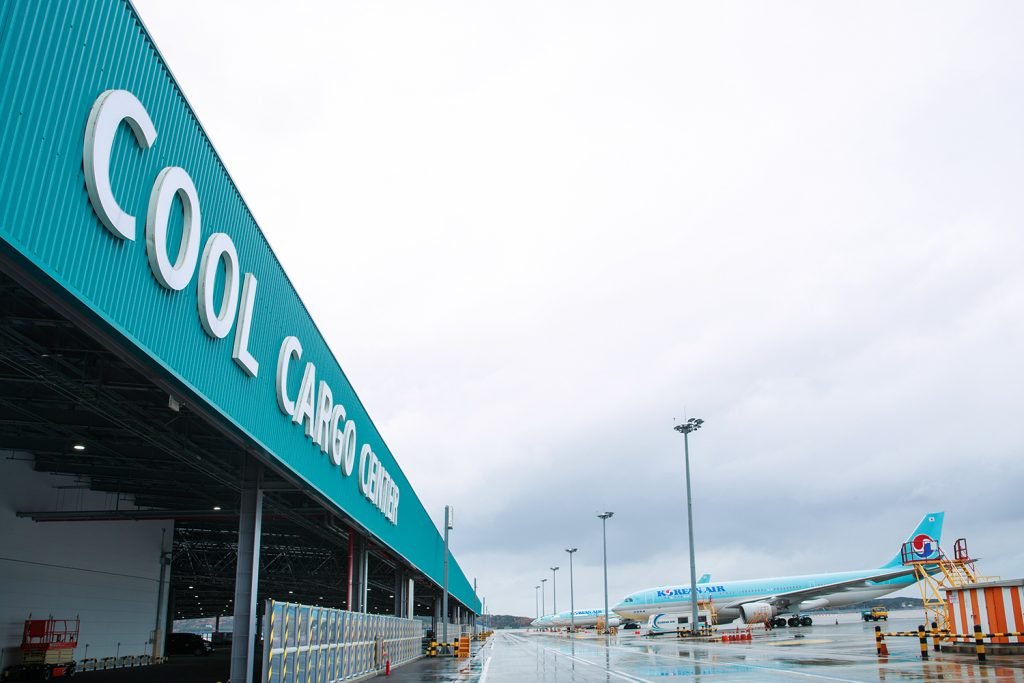
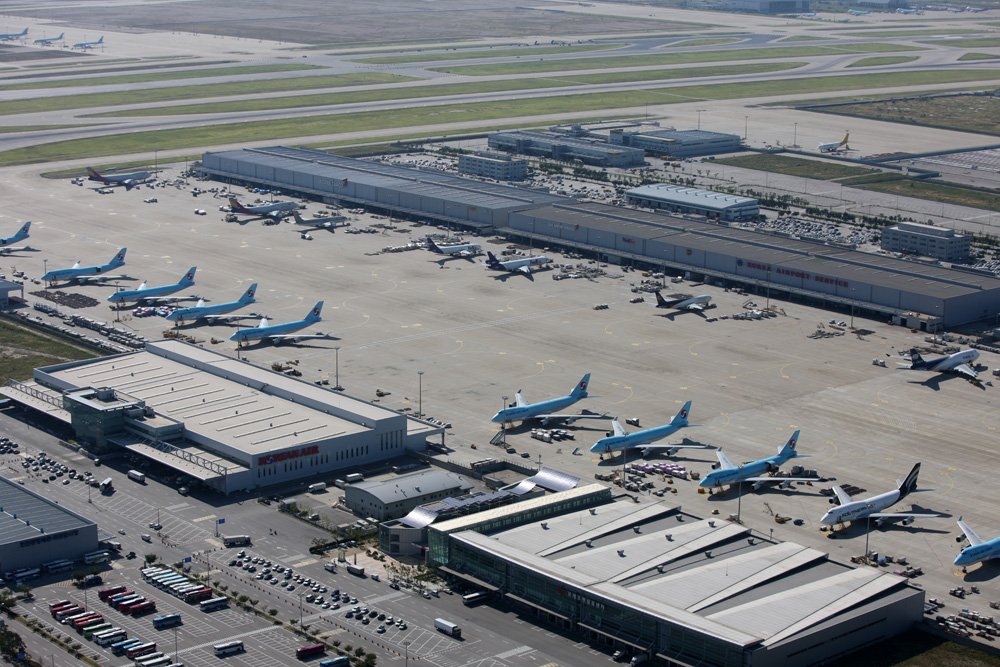
In addition to major cargo terminals operated by Korean Air, Asiana and AACT, Incheon Airport directly develops and manages a Free Trade Zone (FTZ), which covers 3.2 million square metres and is dedicated to facilitating air logistics. The FTZ accommodates approximately 700 airline and logistics companies, allowing for a wide range of logistics and manufacturing activities at a reasonable cost.
With growing uncertainties, global companies are actively restructuring their supply chains. In this context, the strategic value of Incheon Airport’s FTZ is further highlighted, as it offers rapid connections to major regions such as Asia, North America, and Europe – all within ten hours – and provides a highly efficient customs clearance environment. These strengths are expected to significantly contribute to further cargo growth at Incheon Airport.
In addition, with the goal of becoming a ‘sustainable cargo airport’, Incheon Airport has established its Air Cargo Major Strategy (2024-2030) and is actively pursuing initiatives such as attracting a Global Distribution Centre and developing US cargo routes, such as the new Aloha Express service launched in partnership with Air Premia and Amazon Air Cargo, to connect South Korea with the US mainland via Honolulu, Hawaii.
DO YOUR CARGO AMBITIONS INCLUDE PLANS TO BUILD ANY FACILITIES OR SMART TERMINALS?
Smart cargo terminals are a core infrastructure for securing both logistical efficiency and global competitiveness in the era of the Fourth Industrial Revolution.
Traditional cargo terminals have shown limitations due to labour-intensive environments and aging facilities, particularly in processing speed and operational stability.
Our vision is to completely modernise these terminals through the integration of AI, IoT, robotics, and big data technologies. This digital transformation in cargo operations will allow us to proactively meet future aviation logistics demand by increasing cargo throughput and shortening lead times, positioning Incheon Airport as a global smart logistics hub. Furthermore, it will attract global logistics companies, generate employment opportunities, and drive economic growth.
As a first step, we are implementing a pilot project from this year through 2030 to install advanced automation and unmanned logistics equipment, along with IT systems, within the existing terminal space. Based on the outcomes of this pilot phase, we plan to launch a second-phase full-scale construction of a new smart cargo terminal.
Once we gain experience of operating such a facility, we aim to expand the model to overseas airport projects, thereby diversifying our business and enhancing Incheon’s global influence in the logistics sector.

DO YOU CONSIDER ICN TO BE A SMART AIRPORT IN TERMS OF INNOVATION AND DEVELOPING/EMBRACING NEW TECHNOLOGY?
In my experience, yes. In March 2024, we officially declared a ‘Digital Transformation’ strategy. This was not merely a technology adoption initiative but a commitment to shift our entire operational and organisational culture toward a digital-first mindset, marking a pivotal starting point for our transformation into a truly digital global airport.
Under this strategy, we continue to expand the scope of digital innovation across the entire customer journey. For example, we are gradually introducing autonomous mobility solutions such as self-driving shuttle buses and indoor autonomous vehicles to improve airport accessibility and assist passenger movement.
Since May 2025, our digital twin-based intelligent traffic control system has greatly improved the efficiency and safety of ground transportation by collecting and analysing real-time traffic data and swiftly responding to incidents.
The facial recognition-based ‘Smart Pass’ simplifies departing procedures by enabling passengers to pass through using only their faces, boosting both security and convenience and cutting waiting times by approximately 40%.
Scheduled for launch in late 2025, self-service check-in robots are expected to further reduce passenger wait times and alleviate staff workloads during peak hours. Since first introducing 11 robots in 2018 for tasks like guidance and cart transport, we have expanded their roles to include patrols, self-check-in, and docent services.
Lastly, we are enhancing personalised passenger guidance through initiatives such as a renewed airport information app and the development of an AI-powered integrated customer service management system.
CAN YOU PROVIDE SOME EXAMPLES OF ICN’S GREEN CREDENTIALS?
We attained Level 4 status in ACI’s Airport Carbon Accreditation programme in September 2023 and have been a member of the RE100 global corporate renewable energy initiative since 2022. We are on track to source 15% of our total electricity needs this year from renewable sources, leveraging 39MW of solar and 10MW of geothermal power installed onsite.
We are investing in large-scale green infrastructure – including building a 35MW solar farm this year – to accelerate our journey toward 100% renewable energy by 2040.
To support the transition to green mobility, we are developing extensive infrastructure, including over 1,000 EV charging stations, equipment electrification facilities for ground handling operations, and the airport’s first large-scale liquefied hydrogen fuelling facilities.
Lastly, in September 2024 we began commercial operations using Sustainable Aviation Fuel in partnership with the government, airlines, ground handlers, and refiners. To support adoption, we have implemented incentive programmes for SAF users.

ICN HAS LONG BEEN CONSIDERED A CUSTOMER SERVICE CHAMPION DUE ITS SUCCESS IN ACI’S ASQ PROGRAMME AND OTHER AWARDS. CAN YOU RAISE THE BAR ANY HIGHER?
ICN is unique in having achieved the top ranking in both of ACI’s major global airport evaluation programmes for quantitative (ASQ) and qualitative (Customer Experience Accreditation) measures – demonstrating outstanding customer experience on the global stage.
Since 2005, Incheon has ranked first in ASQ (Best Airport) nearly every year and is the only airport worldwide to have secured the highest level in ACI’s Customer Experience Accreditation initiative for three consecutive years.
Our 5-Star Airport ranking in the annual SKYTRAX World Airport Awards represents the hard-earned result of the unified efforts of our 94,000 on-site employees, all committed to making Incheon airport the world’s leading service-oriented airport.
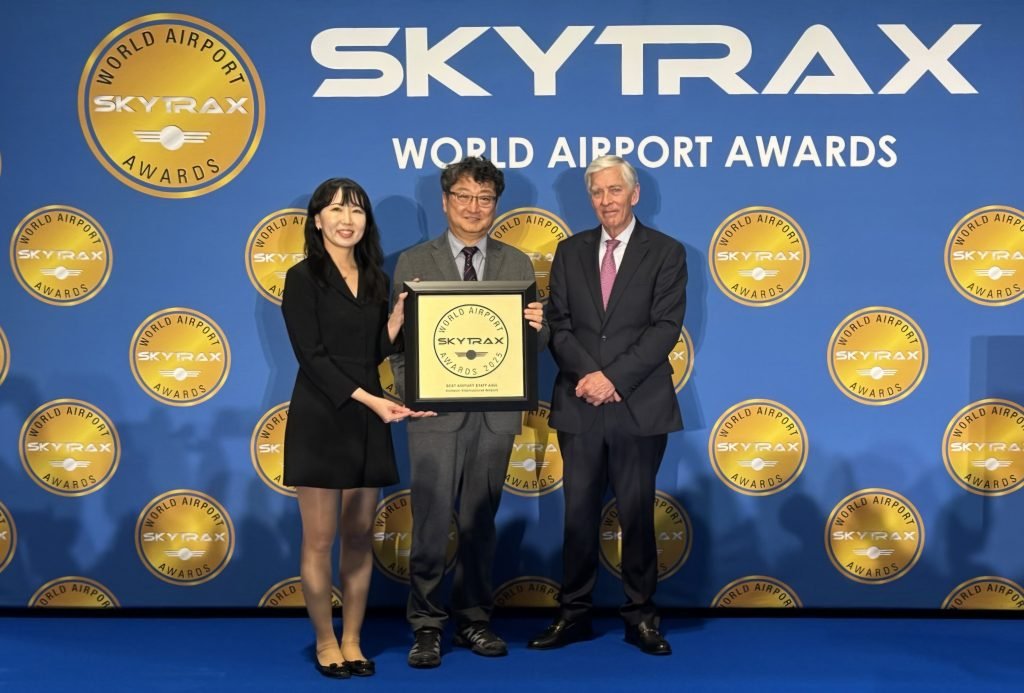
To stay ahead, we will continue to develop premium departure services, expand off-airport and embrace new technology, such as Smart Pass and other self-service options. Furthermore, we have developed the industry’s first professional-level global training course in airport customer experience (CX) with ACI and will share our CX expertise worldwide.
Moving forward, our aim is to drive a comprehensive digital transformation in airport operations that will provide even more differentiated services and ensure a safer and more convenient airport experience. We are also committed to adding elements of culture and the arts to further innovate and differentiate the experience. You can always do more to enhance customer service.
TELL US MORE ABOUT YOUR POLICY OF BUILDING STRATEGIC PARTNERSHIPS WITH OTHER AIRPORTS?
To date, Incheon Airport has signed a total of 12 co-operation agreements with nine major international airport operators, including Schiphol, Vienna, Istanbul, and Airports of Thailand (AOT), among others.
In particular, we have built strategic partnerships with airports such as Schiphol and Vienna, with whom we carry out secondment programmes for the exchange of staff and hold annual working group meetings focused on areas of mutual interest.
Through these strategic partnerships, we’re able to quickly adopt global best practices, promote joint R&D and digital transformation initiatives, and respond collectively to global challenges.
These efforts are generating tangible synergies that help us stay competitive and accelerate our transition into the airport of the future.

IS IIAC ONCE AGAIN SET TO BECOME AN OPERATOR AND INVESTOR IN AIRPORTS OUTSIDE OF SOUTH KOREA?
Expanding our business overseas by exporting the ‘K-Airport Model’ is a core priority.
Since its opening in 2001, Incheon Airport has undergone four phases of expansion projects, through which it has accumulated world-class expertise in airport construction and operations. We are now once again leveraging this experience to actively pursue international projects.
Starting with the operational consulting project for Erbil New Airport in Iraq in 2009, IIAC has won 39 contracts across 18 countries, totalling $405 million. Notably, last year we achieved a record performance in overseas business by securing five new projects – including the development and operation of Manila Airport – with combined orders amounting to KRW147.5 billion.
This year, IIAC is working to participate in public-private partnership (PPP) projects for the operation and development of two airports in Montenegro and is also seeking to win contracts such as the digital transformation of Ethiopia’s Bole International Airport.
Regarding the Urgench Airport project in Uzbekistan, although the final concession agreement has yet to be signed, IIAC is currently designated as the preferred bidder, and we aim to reach a final agreement through exclusive negotiations over the next few months.
We are focusing our capabilities on directly developing and operating more than ten overseas airports by 2030. We plan to actively pursue contracts for large-scale, long-term, high value-added projects.