Looking to the future

Share
With traffic growth now firmly back on the agenda, airports across Asia, the Pacific and the Middle East are investing in upgrading their facilities, writes Joe Bates.
According to data from ACI Asia-Pacific and Middle East, airports across both regions are poised to undergo extensive development, with combined investments of $240 billion dedicated to both upgrading existing facilities (brownfield projects) and building new airports (greenfield projects) between 2025 and 2035.
This capital expenditure, revealed by ACI Asia-Pacific & Middle East (ACI APAC & MID) during its annual Assembly, Conference and Exhibition in New Delhi in April, highlights the regions’ commitment to meeting the increasing demand for air travel and cargo.
ACI APAC & MID conducted a comprehensive survey, comprising over 30 key airports from the region to assess airport development needs.
The findings indicate a strategic focus on both modernisation of the existing airports and development of new airport infrastructure.
– Brownfield Development (Modernisation of existing airports): More than $136 billion would be invested to upgrade existing airports, creating an additional 680 million passenger capacity and 14 million tonnes of cargo capacity.
– Greenfield Development (Development of new airports): In excess of $104 billion will be allocated to build new airports, adding 562 million passenger capacity and 57 million tonnes of cargo capacity.
This combined investment will create additional capacity for 1.24 billion passengers – the equivalent of more than 13 airports the size of Dubai (DXB), the world’s busiest airport for international passengers – and 71 million tonnes of cargo capacity, which is nearly 14 times the cargo throughput of Hong Kong (HKG), the top ranked airport for cargo in the world.
This significant increase will ensure airports in Asia-Pacific and the Middle East are well-equipped to handle anticipated future growth.
ACI Asia-Pacific & Middle East president, SGK Kishore, said: “The $240 billion investment is not just about concrete and runways, it’s about socio-economic development in the region.
“Enhanced passenger experiences will stimulate tourism and business travel, while bolstered cargo capacity will streamline supply chains, driving regional trade and development.
“We are committed to working with our member airports and stakeholders to ensure these investments deliver tangible results to the local and regional economies.”
ACI APAC & MID’s director general, Stefano Baronci, said: “The investment marks a critical step in transforming sector and delivering high-quality experience to passengers.
“The investment will create additional capacity in the medium-to-long- term. However, infrastructure development alone cannot support the growth to its full potential.
“In today’s increasingly complex economic landscape, we need the continuous support of governments to further liberalise air transportation and streamline visa policies across region. These are proven drivers of economic development. In contrast, protectionist measures ultimately hinder progress and limit opportunity.”
ACI Asia-Pacific and Middle East states that the projected $240 billion investment in infrastructure over the next decade reflects a pragmatic and demand-responsive approach to capacity planning.
Rather than overextending, it notes that airports in these regions continue to align investment closely with market conditions and passenger demand forecasts, ensuring capital is deployed efficiently and sustainably.
Indeed, according to ACI APAC & MID, this disciplined approach reflects a broader commitment to resilient and adaptive infrastructure planning, positioning the sector to support regional growth while maintaining financial prudence and operational agility.
By 2053, the Asia-Pacific and Middle East regions are expected to serve nearly 11 billion passengers, close to a three-fold increase from the 3.9 billion passengers in 2024.
On the following pages we highlight a number of infrastructure development projects that are either on the drawing board, ongoing or have been successfully completed by airports seeking to ensure that they have the facilities and the capacity to meet demand and avoid becoming victims of their own success.
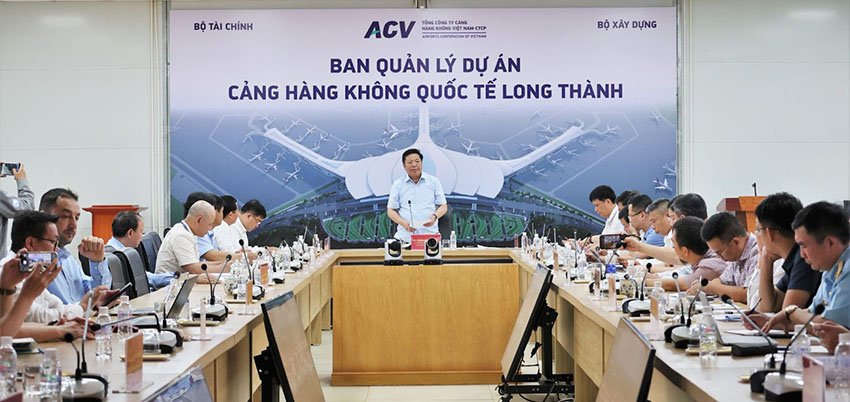
LONG THANH SET TO OPEN IN LATE 2026
The first phase of Vietnam’s new $4.6 billion gateway, Long Thanh International Airport, is on target to open in late 2026, according to local news reports.
Vietnam’s Minister of Construction, Tran Hong Minh, recently visited the airport site when Le Quyet Tien, Director of the Department of Economics-Construction Investment Management at the Ministry of Construction, revealed that the construction of several key projects is being accelerated.
These include the construction of the terminal’s roof, second runway, 115-metre-tall air traffic control tower, aircraft catering facilities roadways, bridges and maintenance hangars.
Long Thanh’s main 4,000-metre-long runway, Runway 1, was completed on April 26, 2025, three months ahead of schedule and, according to reports, the lighting system has been successfully tested and is ready for calibration flights.
Concluding the meeting, Minister Tran Hong Minh stated that people of Vietnam have placed a lot of trust and hope in the Long Thanh airport project because it is a large project being built by Vietnam for Vietnam.
BANGKOK SUVARNABHUMI EXPANSION
Airports of Thailand (AoT) has confirmed the ambition to upgrade Bangkok-Suvarnabhumi Airport (BKK) to equip it to handle up to 150 million passengers per annum by 2033.
AoT’s $4.3 billion master plan for BKK, which currently accommodates around 60mppa, includes the eastern expansion of existing terminal, the construction of a U-shaped South Terminal, addition of a fourth runway and a new Automated People Mover (APM) system to link the new terminal with the main passenger terminal.
AoT notes that the $365 million East Expansion project for the main terminal will raise BKK’s design capacity by 15mppa to 80 million. Construction is scheduled to begin in November, with completion expected by 2028. The expansion will increase the terminal’s footprint to 480,000 square metres.
The huge new South Terminal is expected to feature around two kilometres of kerbside and be capable of handling 70mppa on its own when it opens 2033.
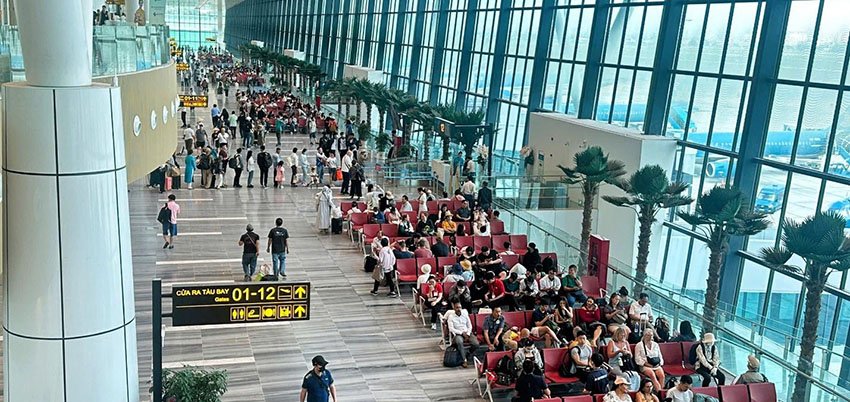
At its heart will be a 200,000-square-metre ‘Mega Terminal’ boasting commercial areas, shopping, and dining facilities accessible to both travellers and the public.
Earlier this year, Thailand’s King Maha Vajiralongkorn Phra Vajiraklaochaoyuhua and Queen Suthida Bajrasudhabimalalakshana officially inaugurated BKK’s new Midfield Satellite building (SAT-1) and third runway.
NEW TERMINAL 3 AT TAN SON NHAT INTERNATIONAL AIRPORT
Elsewhere in Vietnam, the Airports Corporation of Vietnam (ACV) reports that the newly opened Terminal 3 at Ho Chi Minh City’s Tan Son Nhat International Airport has been warmly welcomed by passengers and helped reduce congestion in Terminal 1.
On May 20, ACV stated that in its first month of operations, Terminal 3 handled 1,464 flights and served 355,306 passengers, “ensuring operational safety, at the same time proving its important role in improving the capacity and quality of aviation services at one of the busiest airports in the country”.
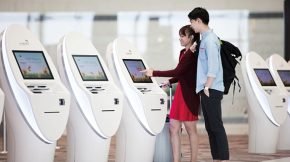
Equipped with E-gates and other “advanced aviation technologies focused on the passenger experience”, the airport operator notes that T3’s self-service systems have provided travellers with a smooth departures process, courtesy of shared automatic check-in kiosks for both passengers and baggage.
In addition, it notes that Terminal T3’s facilities include a wide range of shops and restaurants, free drinking water stations, phone charging areas and offers free Wi-Fi access.
CHONGQING JIANGBEI OPENS GIANT NEW TERMINAL
Chongqing Jiangbei International Airport unveiled its new T3B terminal in April, marking a significant milestone in its ambitious expansion programme.
The new addition means that the south west China located gateway now has three terminals, one satellite hall, four runways and cargo facilities capable of handling up to 80 million passengers, 1.2 million tonnes of cargo and 580,000 aircraft movements annually.
T3B is said to boast advanced smart features and intelligent technology that have transformed traditional passenger processing procedures.
It notes that 151 of its 222 boarding gates now utilise facial recognition self-service technology capable of processing passengers in as little as five seconds.
Autonomous trains will link the 360,000sqm T3B with the airport’s other terminals
Adding to the terminal’s futuristic appeal are 22 multifunctional “compass box” robots that integrate flight information display, broadcasting, surveillance, and fire safety functions.
The airport currently operates over 40 international routes with nearly 200 weekly flights connecting North America, Europe, Oceania, the Middle East, Japan, Korea, and Southeast Asia.
WORLD EXPO VISITORS ENJOY KIX’S NEW-LOOK TERMINAL 1
Kansai International Airport’s fully refurbished Terminal 1 opened as planned a few weeks ahead of the World Expo in Osaka which is expected to attract millions of extra visitors to the region this year.
The upgrade to the iconic terminal building has increased the size of the international departure lounge by 60%, providing space for new retail offerings, the introduction of innovative retail layouts based on passenger experiences, and the creation of a seamless processing experience. Kansai Airports and global design firm Populous have been working for more than seven years to completely reimagine the airport’s floor plan, bringing a new level of efficiency and experience for travellers to western Japan.
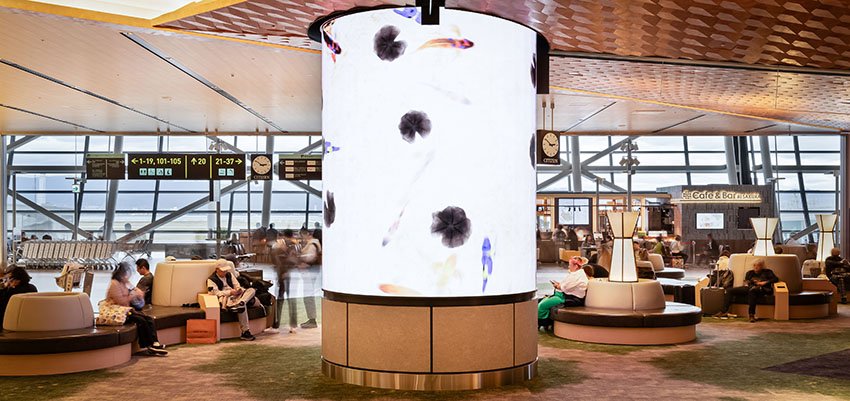
Populous led the architecture and interior design of the redevelopment, as well overseeing the project throughout construction.
The project was completed in four phases to allow for continued operations of the airport, which is expected to accommodate more than 40 million passengers a year from 2025 and almost double its international capacity.
The final phase of the project was completed in late March 2025 to allow for the consolidation and extension of the security screening area ahead of World Expo 2025, which began in April in Osaka.
A new commercial area in Terminal 1 includes 13 stores across international departures, international arrivals and a street food court.
Regarded as part of the high-tech architecture movement of the 1990s, KIX’s industrial design is famous for its asymmetrical clear span sweeping aerofoil roofline.
At 1.7 kilometres long, it is one of the longest airport passenger terminal buildings in the world.
BECHTEL TO HELP DELIVER RIYADH’S KING SALMAN INTERNATIONAL AIRPORT
Bechtel has signed an agreement with the King Salman International Airport Development Company to serve as the delivery partner for three new terminals at King Salman International Airport (KSIA) in Riyadh.
Signed during US President Donald Trump’s visit to Saudi Arabia, the agreement highlights growing US-Saudi infrastructure ties and builds on Bechtel’s experience delivering more than 300 projects in Saudi Arabia, including the recently opened Riyadh Metro.
The airport, expected to be the world’s largest when it opens in the coming decade, is a pillar of Saudi Arabia’s Vision 2030 that will serve as an economic engine for Riyadh and the surrounding region.
“The King Salman International Airport is a landmark project that will reshape Riyadh and enhance the lives and communities it serves,” said Darren Mort, president of Bechtel’s infrastructure business.
“We have delivered some of the world’s largest and most complex airports, incorporating innovative and sustainable solutions, and look forward to partnering with the King Salman International Airport Development Company to bring their vision of a world-class passenger experience to life.”
When fully completed, the airport is expected to boast six parallel runways and be capable of handling up to 185 million passengers and 3.5 million tons of cargo annually by 2050.
Bechtel will work with the King Salman International Airport Development Company to manage delivery of a terminal for commercial carriers, Terminal 6 for low-cost carriers, and a new private aviation terminal with hangars.
The project team will prioritise achieving LEED Platinum certification by integrating innovative sustainable practices into the design and construction of all three terminals.
The terminals will absorb or replace all existing facilities of the King Khalid International Airport.
NEW OMANI AIRPORT
The Sultanate of Oman is set get a new $250 million gateway to replace the capacity constrained Khasab Airport located in an Omani enclave on the Musandam Peninsula.
With the design process for the planned new Musandam Airport now complete, Oman’s Civil Aviation Authority is inviting bids from consultancy companies to carry out a value engineering study for the gateway, which is slated to open in the second half of 2028.
According to reports, Musandam Airport will be developed in two phases, initially boasting a 250,000 passengers per annum capacity terminal and a single 2,500m metre long runway runway capable of handling aircraft up to the size of the B737 and A320.
A proposed second phase will see the runway lengthened to 3,300 metres, with the ability to handle widebody aircraft, an expansion of the terminal building, more taxiways, and enlarged apron areas.
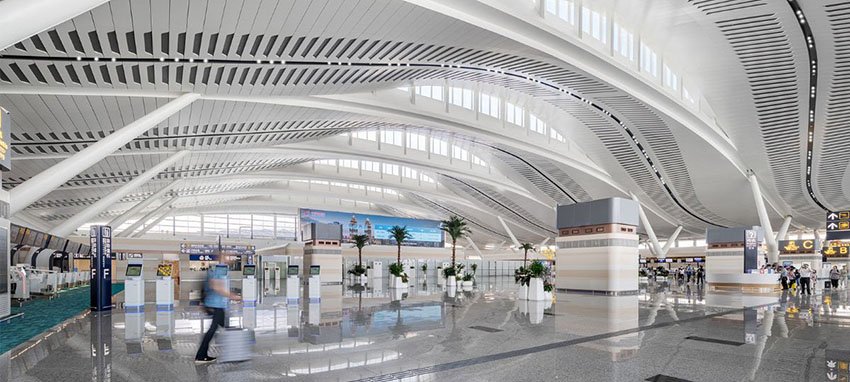
The new airport is one of several scheduled to be built, or expanded, under plans by the Sultanate to improve its aviation infrastructure.
The Musandam Peninsula, overlooking the strategic Straits of Hormuz at the mouth of the Arabian Gulf, is an Omani exclave, separated from the rest of Oman by UAE territory.
The enclave’s current gateway, Khasab Airport, has operational constraints that include the inability to operate on a 24-hour basis.
FIRST ANNIVERSARY FOR YANTAI PENGLAI’S TERMINAL 2
It may not be brand new having opened its doors to the travelling public in June 2024, but Yantai Penglai International Airport’s Terminal 2 (pictured above) is worthy of mention because of its stunning architecture and the difference it has made to the Chinese gateway.
Located to the south of T1, the addition of Terminal 2 means that the Shandong province gateway is now equipped to handle up to 23 million passengers and 200,000 tons of cargo annually.
According to lead design architect, Aedas, the project adheres to the concept of ‘being holistic, ecological, efficient, flexible, and intelligent.’
Sporting an E-shaped layout with the main building parallel to the runway, the expansion includes a south concourse, a south apron, a second runway, and car parks.
Aedas notes that Yantai is known for its unique coastal mountain-scape, and that the sweeping roof form of the terminal is inspired by the Yantai’s majestic Kunyu Mountain.
It states: “Undulating skylights bring light deep into the terminal’s Departures check-in and processing halls. The concourses are arranged to form a long coastline, with generous bays for aircraft parking and circulation. Skylights over the concourses guide passengers intuitively towards the departure gates.”
Being built in phases to maximise the airport’s potential to grow, plans are already in place to expand T2’s footprint from 167,000sqm to 200,000sqm by 2040 to raise its capacity to 34mppa.
NEXT STEP FOR QUEENSTOWN AIRPORT
Queenstown Airport is about to begin the next major project in its capital development programme.
Over the next 14 months, the terminal building will be extended north towards the airfield to provide 800sqm of new office and operational space for Air New Zealand, PlaneBiz (Menzies Aviation) and Aviation Security Service.
Fit out of the new space and renovation of existing offices will then proceed in stages, with the overall project scheduled for completion early in 2027.
“This will give airline staff working behind the scenes a much better work environment, and will also improve operational efficiency,” says project manager, Greg Emms.
The extension will include a non-passenger screening room where airport workers, contractors, and visitors will undergo security checks before entering restricted areas. The project also incorporates significant electrical upgrades.
A new 1.5 MVA transformer will be installed and connected to the high-voltage network at Lucas Place. A new main electrical switch room and a new airfield ground lighting power centre will also be constructed. Once these are operational, the existing Airways power centre building will be demolished.
“This is an important investment in resilience,” added Emms. “Queenstown Airport is an essential community asset, and we need to ensure our critical infrastructure is robust.”
Queenstown Airport is also spending about NZ$10 million on the final two stages of a programme to seismically strengthen the structure of the terminal and increase its ability to withstand an earthquake.
The project involves a combination of structural steelwork, bracing, micro piling, and the reinforcement of columns. Contractors have started in the baggage hall and will soon move into the check-in area, then into the centre of the terminal. The work is all being done at night and isexpected to take about 17 months to complete.
“This seismic strengthening project underscores Queenstown Airport’s commitment to the safety of our passengers, staff, and wider community,” stated chief operating officer, Todd Grace. “It is also an important part of our efforts to enhance the airport’s infrastructure and ourpreparedness for a natural disaster.”
MASS PASSENGER EXERCISE HELD AT NEWCASTLE’S NEW TERMINAL
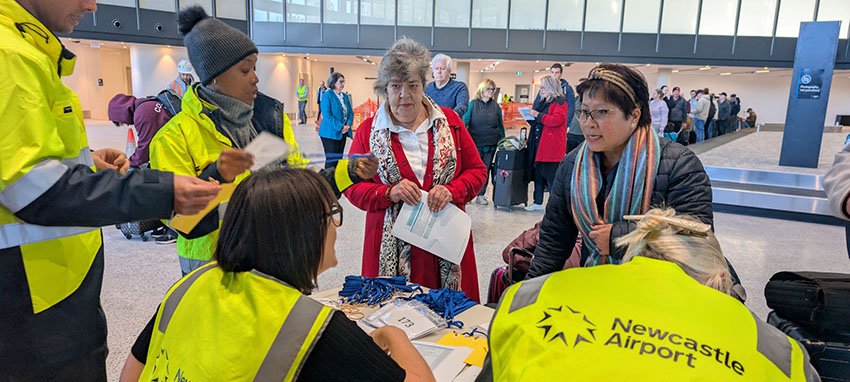
In a major step before opening, Newcastle Airport’s new international terminal came to life on June 10 as over 120 local volunteers helped test the facility during a full-scale Mass Passenger Exercise.With surfboards in tow, guitars slung over shoulders and bags packed to the brim, participants from across the Hunter took on the role of international travellers at the Australian gateway.
They moved through check-in, security screening, border controls and baggage collection while airport staff and partner agencies closely observed.
Newcastle Airport CEO, Linc Horton, thanked the community for turning out in force to support their airport and said terminal preparation and readiness could not happen without them.
“Thank you also to Business Hunter, the University of Newcastle and Port Stephens Council for supporting our Mass Passenger Exercise and getting the message out for volunteers,” enthused Horton.
“Our terminal was absolutely buzzing today with people showing up ready and excited with their bags, surfboards, oversized luggage and even a service dog, people with reduced mobility and hidden disabilities to help us test accessibility. That level of detail and support is what makes this region special.
“The Mass Passenger Exercise marked the end of the construction phase and the beginning of the new international terminal’s operational journey. We’re now moving from build to activation and today was about making sure we are ready to deliver from day one.”
Newcastle Airport’s new terminal will support Jetstar’s direct flights to Bali from October with further domestic and international services expected to follow.
As one of the most significant infrastructure investments in the region, the terminal will enhance tourism, trade and connectivity.