Green innovation

Share
Airports across ACI’s Asia-Pacific and Middle East region continue to pioneer green initiatives and deliver on sustainability, writes Joe Bates.
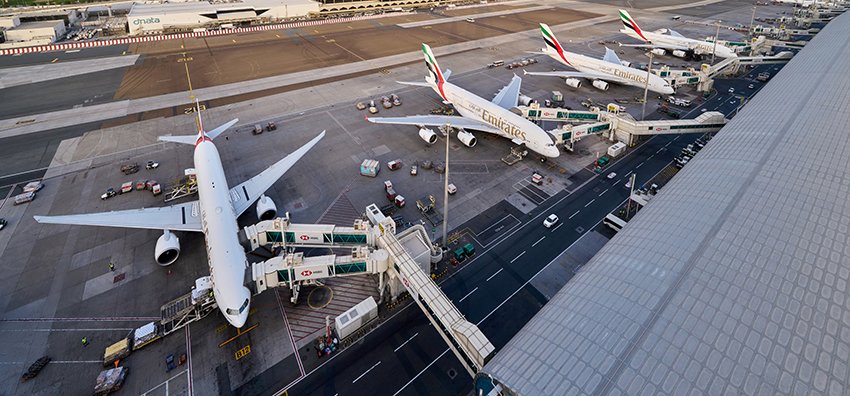
DXB CONTINUES TO RAISE THE SUSTAINABILITY BAR
Dubai International Airport’s (DXB) has achieved Level 4 ‘Transformation’ status in ACI’s Airport Carbon Accreditation programme.
The UAE hub notes that the achievement recognises its efforts to cut carbon emissions and places it among the top 5% of airports participating in the programme.
‘Transformation’ certification is awarded to airports that realise absolute emissions reductions and drive systemic change with its stakeholders.
The airport has no doubt that its commitment to minimising its environmental impact and enhancing operational efficiency – with a comprehensive focus on decarbonisation, resource conservation, and the adoption of cutting-edge technologies – will play a key role in supporting the UAE’s Net Zero 2050 strategy.
“Achieving Level 4 ‘Transformation’ accreditation underscores our firm commitment to embedding sustainability at the core of everything we do at Dubai Airports,” enthuses Dubai Airports CEO, Paul Griffiths.
“This recognition not only highlights our progress in reducing our own carbon footprint but also reflects the strength of our partnerships in driving broader, systemic change across the aviation ecosystem.
“For us, sustainability is not a checkbox – it’s a long-term strategy that involves collaboration, innovation, and constant improvement.
“The responsibility we own goes beyond our operation; it’s about leading by example and embracing a culture where every stakeholder plays a part in creating a more sustainable future. Together, we are setting a new standard for what is possible in airport operations, as we continue to support Dubai’s and the UAE’s leadership in the global effort towards Net Zero by 2050.”
DXB has made significant progress through key initiatives and partnerships aimed at advancing sustainable aviation.
For example, a recent collaboration with dnata and Emirates National Oil Company (ENOC) is designed to transition dnata’s non-electric airside fleet to a biodiesel blend, reducing carbon emissions by over 3,500 tonnes annually.
Other initiatives include a partnership with Etihad Energy Services to enhance energy efficiency through building and lighting retrofit and solar integration, and a collaboration with BEEAH Group, reducing landfill waste by 60% through an innovative food waste treatment plan.
On the airfield, DXB’s adoption of the ‘Follow the Greens’ system has also optimised aircraft taxiing, cutting fuel consumption and emissions.
While other successful initiatives include active engagement with ‘Airports of Tomorrow’, a collaborative venture by the World Economic Forum (WEF) and ACI, to steer the aviation industry toward net-zero carbon emissions by 2050.

GREEN LOAN PART OF NEWCASTLE’S SUSTAINABILITY FOCUSED FUTURE
Newcastle Airport has joined forces with CommBank to fund a raft of pioneering sustainability programmes at the Australian gateway via an innovative A$235 million Green Sustainability-Linked Loan (GSLL).
The GSLL converts existing loan funding to one linked to specific sustainability actions and outcomes.
Airport CEO, Dr Peter Cock, said with the support of the GSLL, Newcastle Airport is proud to be part of the Hunter Region’s transition to low carbon energy.
“As we strive to be the green gateway to the Hunter, we are committed to supporting and demonstrating the region’s shift towards a sustainable future,” he enthused.
“Our new terminal, which has achieved 5 Star Green Star standard in design, reflects our dedication to environmental responsibility and our role in this important transition.
“We have already achieved net zero for Scope 1 and 2 emissions well ahead of our 2030 goal. It’s ambitious programmes like this that are really setting the standard for how we approach sustainability.
“Our terminal expansion build has also been Designed Assessed by the Green Building Council of Australia (GBCA) and is on track to receive a 5 Star Green Star Buildings rating – the first airport terminal in Australia to achieve this under the new rating tool.”
CommBank’s GSLL is broadly tied to Newcastle Airport’s efforts to reduce Scope 3 emissions, achieving a high ACA level and minimising waste sent to landfill across the entire airport precinct, with interest rates linked to ambitious progress against these goals.
In the past year, Newcastle Airport has made significant progress towards becoming one of the most sustainable airports in Australia, including partnering with Australian renewable energy retailer to allow energy requirements to be met entirely through renewable sources helping to achieve net zero Scope 2 emissions well ahead of the airport’s original 2030 target.
AIRPORTS OF THAILAND UNVEILS GREEN MANAGEMENT PLAN
Thai airport operator, Airports of Thailand (AOT), has ambitions to transform Chiang Mai, Mae Fah Luang, Phuket, Hat Yai and Bangkok’s Suvarnabhumi and Don Mueang airports into ‘green’ gateways.
The six international airports currently account for 95% of all air traffic across Thailand.
According to AOT’s chief advisor for engineering and construction, Jakkraphob Jarassri, the new green strategy focuses on four main pillars – connectivity, system integration, sustainability and airport size.
From the sustainability perspective, the focus is on fostering an eco-friendly airport environment in co-operation with local communities, aimed at reducing the long-term environmental impact of airport activities.
Jarassri, speaking at the recent ‘Road to Net Zero 2024: The Extraordinary Green’ event, said: “As for airport size, we realised that large airports are not always necessary, and will try to keep these suitable for users’ needs while still maintaining efficiency and convenience.”
In support of Thailand’s bid to reduce carbon emissions from the transport sector, AOT routinely monitors
energy consumption at its airports.
“We try to reduce energy usage to minimise greenhouse gas emissions as much as possible,” added Jarassri.
“AOT also plans to purchase carbon credits in the future to offset the portion of emissions that we cannot reduce.”
BAHRAIN BECOMES FIRST AIRPORT TO RECEIVE IATA ENVIRONMENTAL ASSESSMENT CERTIFICATION
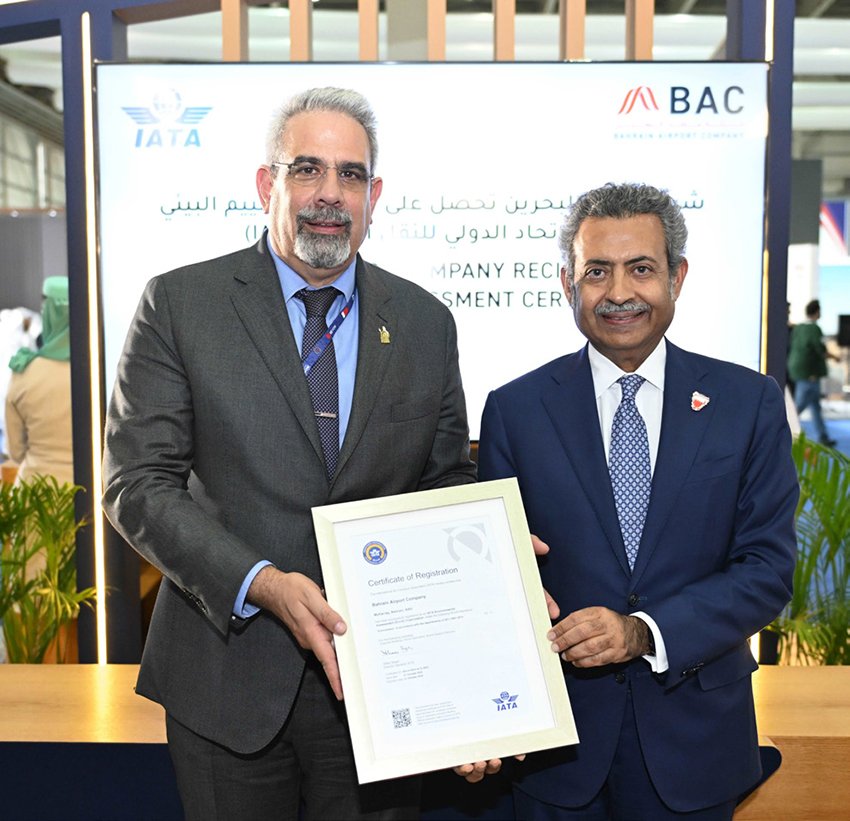
Bahrain International Airport has become the first airport in the world to attain IATA Environmental Assessment (IEnvA) Certification.
Operator, Bahrain Airport Company (BAC) believes that the achievement highlights the airport’s innovative approach to environmental sustainability and responsible operations.
BAC CEO, Mohamed Al Binfalah, stated: “Achieving the world’s first IEnvA airport certification is a remarkable milestone, reflecting BAC’s strategic dedication to minimising the airport environmental footprint.
“This achievement is a direct result of the hard work and dedication of the entire airport community, who have embraced our strategic objective.
“By minimising our environmental impact, we not only enhance our own performance but also contribute to a more sustainable future for the entire aviation industry.”
Established by IATA over a decade ago, the IEnvA programme has been instrumental in enhancing the environmental performance of airlines and was expanded to encompass airports and ground handling companies
in July 2022.
BAC enrolled in the programme in February 2023. The rigorous certification process involved five stages, including comprehensive gap analyses and on-site assessments conducted by IATA experts.
LEED GOLD CERTIFICATION FOR HAMAD’S ORCHARD
Hamad International Airport’s Central Concourse, which includes the indoor tropical garden, ORCHARD, has received Leadership in Energy and Environmental Design (LEED) Gold Certification.
The certification showcases the airport’s commitment to sustainability and environmentally responsible construction practices.
LEED certification is a globally recognised symbol of sustainability achievement and one of the most widely used green building rating system.
Certifications are awarded to buildings that meet rigorous environmental standards across various parameters, including energy efficiency, water usage, air quality, and material selection.
The Central Concourse, where ORCHARD is located, is part of Phase A of Hamad International Airport’s expansion plan and was designed to utilise 30% less energy and 55% less overall water usage.
It joins a relatively limited number of airport terminals worldwide which have achieved similar LEED certification from the US Green Build Council.
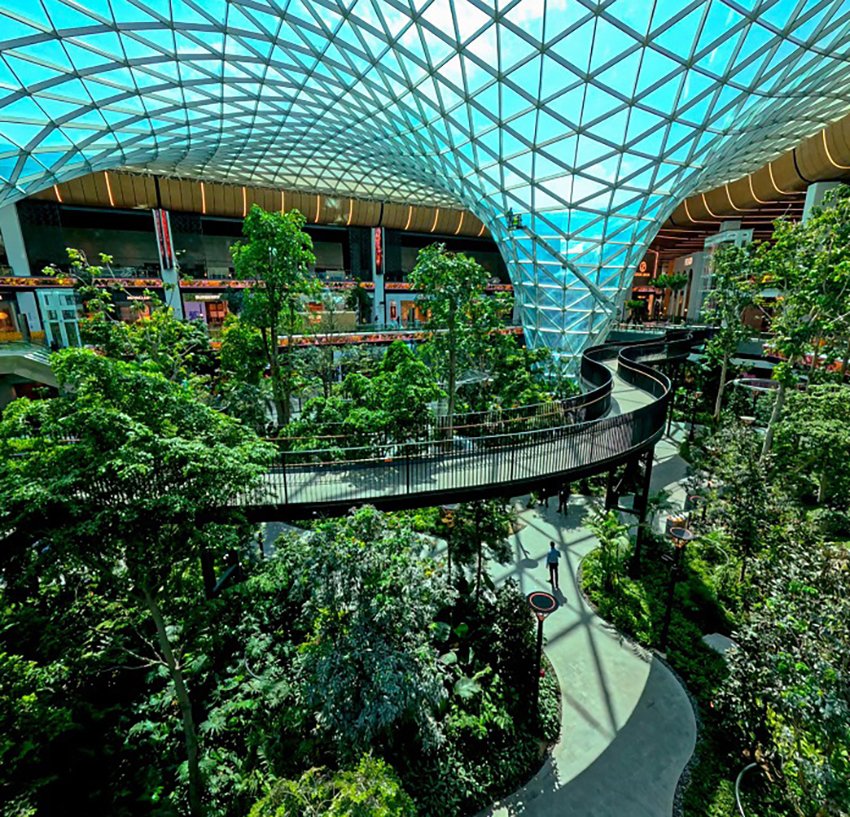
MATAR, the Qatar Company responsible for operating and managing the gateway, believes that LEED Certificate stands as a testament to Hamad International Airport’s ongoing commitment to reducing emissions and addressing climate change through continuous enhancements to the facility’s environmental performance.
The Qatari hub notes that in its sustained effort to promote sustainability, the airport is spearheading innovative initiatives aimed at minimising waste and maximising resource efficiency, further highlighting its dedication to environmental responsibility.
AIRPORT CARBON ACCREDITATION MILESTONE
ACI’s Airport Carbon Accreditation programme has recorded a new milestone with more than 600 accredited airports worldwide.
The programme provides airports with a robust framework for active carbon management. Its success lies in its ability to convert commitments into concrete achievements, offering airports clear and actionable steps to reduce their emissions effectively.
This milestone comes at a time when the urgency for climate action has never been clearer. Airports are playing an active role in the path towards decarbonisation: today, 84 airports worldwide are aligned with the objectives of the Paris Agreement, and accredited airports handle over 53% of global passenger traffic.
Notably, 19 airports have achieved the programme’s highest certification, Level 5, operating net zero facilities for emissions under their control while actively working towards full decarbonisation by 2050 or earlier.
From smaller regional airports to major global hubs, the diversity of participants highlights meaningful progress within the aviation ecosystem. Whether it’s the solar panels powering Kota Kinabalu Airport in Malaysia or the creation of a CO2 reducing seaweed bed at Kansai International Airport in Japan, each accredited airport is contributing measurable results in the global effort to decarbonise.
ACI ASIA-PACIFIC & MIDDLE EAST TO HELP MACTAN CEBU ACHIEVE ITS NET ZERO GOALS
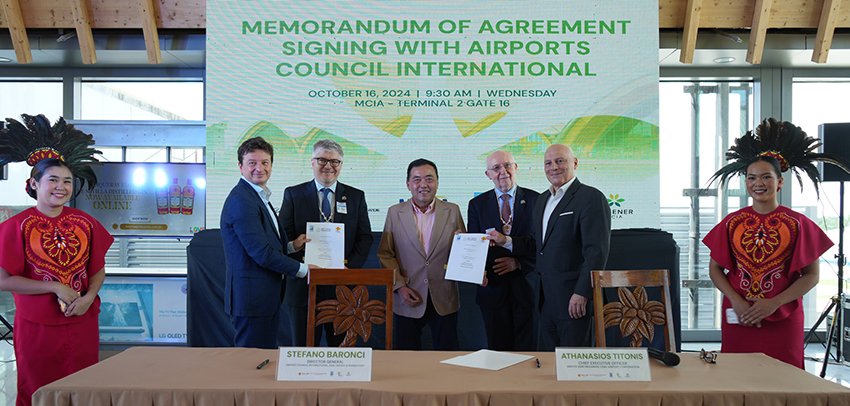
In what is being described as a “significiant milestone”, Mactan Cebu International Airport has signed a Memorandum of Understanding to become the first gateway to take part in a new ACI Asia-Pacific & Middle East programme designed to help airports establish a comprehensive framework on environmentally sustainable initiatives to achieve their net zero emissions goals.
ICAO president, Salvatore Sciacchitano, and secretary general, Juan Carlos Salazar, were present at the signing of the MoU, which took place at 59th Conference of Directors General of Civil Aviation, Asia and Pacific Regions in Cebu, in mid-October.
As a result of the agreement, through its Net Zero Roadmap – a programme endorsed by Airport Carbon Accreditation – ACI Asia-Pacific & Middle East will provide strategic guidance to support the airport’s sustainability journey.
This on-demand service, which is separate to the Airport Carbon Accreditation programme, will help airports create structured plans, including carbon footprint projections, governance frameworks, and recommendations across areas like assets, fuels, and operations.
The programme also offers guidance on CAPEX planning, implementation strategies, and offsetting measures, while connecting airports with global financial institutions for potential funding.
Airport CEO, Athanasios Titonis, has no doubt that the MoU reaffirms his commitment to establishing Mactan Cebu as a benchmark for sustainability among Philippine airports.
“We are proud to be at the forefront of advancing sustainability in Filipino airports. While we recognise there is still much work ahead, our partnership with ACI Asia-Pacific & Middle East gives us confidence that our initiatives will leave a meaningful, long-lasting impact on the environment,” notes Titonis.
“We aspire to inspire other airports across the Philippines and Asia to follow suit. Together, we can drive sustainable tourism, ensuring that destinations worldwide offer enriching and responsible experiences for generations to come.”
Commenting on the new partnership, Stefano Baronci, the director general of ACI Asia-Pacific & Middle East, said: “In an era where environmental sustainability has become not just an option but a fundamental need for the aviation industry, ACI Asia-Pacific & Middle East is proud to lead in guiding our airport members towards achieving their Net Zero emissions goals. We recognise that robust action is required to ensure that airports are prepared for a sustainable future.”