Going green

Share
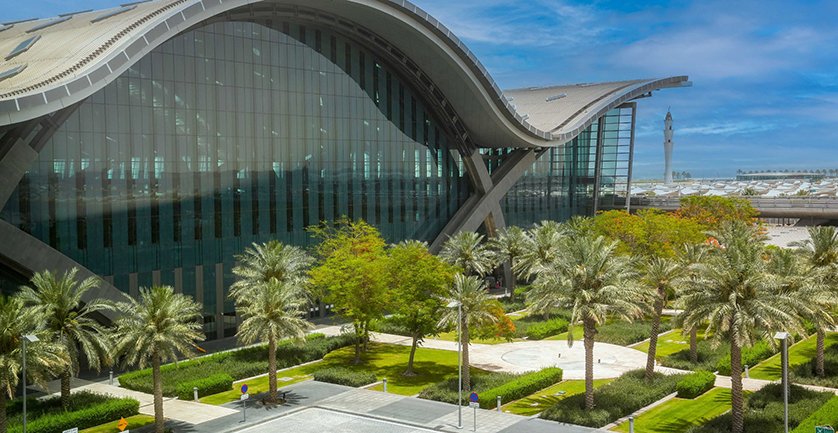
We take a closer look at a handful of sustainability stories making headlines across the region in the first half of 2024.
ENVIRONMENTAL STEWARDSHIP IN DOHA
Hamad International Airport is celebrating its 10th anniversary, and among a host of facts and figures surrounding the milestone, it notes that it is fully committed to environmental sustainability and implementing initiatives to minimise its ecological footprint.
Indeed, the Qatar gateway points out that it is “constantly investing in innovative solutions that will improve its environmental performance”.
These efforts are said to include collaborating with the industry in leading global efforts to control CO2 emissions to tackle climate change, meeting and exceeding industry best practices for air quality and preventing pollution and meeting compliance obligations.
Between 2022 and 2023, through its enhanced waste management system, approximately 40% of waste generated by airport operations was reused or recycled.
Hamad International Airport’s dedicated wastewater treatment plant treats 100% of the airport’s sewage and is working towards maintaining the use of treated sewage effluent for landscape irrigation – resulting in zero potable water used for irrigation and zero wastewater discharged
to the sea.
The Doha airport has also implemented various initiatives and environmental controls to further reduce energy consumption, such as cooling system optimisation, smart metering, and LED lighting. These efforts have led to the airport achieving Level-3 status in ACI’s Airport Carbon Accreditation programme and ISO 14001 Environmental Management Systems accreditation.
In addition to its strategic partnerships for sustainably disposing of waste, Hamad International Airport actively composts organic waste, transforming food scraps and other organic materials into nutrient-rich fertiliser for landscaping.
The airport notes that it is currently exploring the possibility of recycling dry sludge for bio soil production and converting food waste into grey waste for further recycling.
QUEENSTOWN AIRPORT’S BIODIVERSITY PROJECT
As you will able to read on page 8 of this issue, Queenstown Airport has received international recognition for its support of a local wetland restoration project.
The New Zealand gateway has received a Platinum Award in ACI Asia-Pacific & Middle East’s ‘Green Airports Recognition’ programme for its collaboration with the Whakatipu Reforestation Trust and the Shotover Primary School to restore the Shotover Wetland.
The airport has committed to long-term financial assistance and help with planting sessions, community engagement, and education days. Its involvement has accelerated the project, with a target to fully restore the wetland within 10 years.
The Green Airports Recognition judging panel assessed Queenstown Airport against other airports in Asia-Pacific and the Middle East handling up to eight million passengers a year.

Airport chief executive, Glen Sowry, says working through the ACI Green Airports Recognition process was a fantastic opportunity to benchmark Queenstown Airport’s efforts.
“Since the introduction of our Sustainability Strategy five years ago, we’ve seen a 65% reduction in total greenhouse gases from our operations,” says Sowry.
“We know we’ve made some good progress, and we’re really proud of that, but we have great ambition in this space, and we know there’s a lot more we can do to champion sustainability and biodiversity in this region. Queenstown Airport is deeply conscious of the need to protect what makes this special place unique.”
HONG KONG’S AWARD WINNING MARINE PROJECT
Hong Kong International Airport’s ‘Marine Ecology and Fisheries Enhancement Strategy’ project was another to win the highest Platinum Award in the ACI Green Airports Recognition 2024 programme, achieving success in the category for airports handling over 35 million passengers per annum.
Peter Lee, Airport Authority Hong Kong’s general manager for sustainability, enthuses: “We are honoured to receive this award, which commends our voluntary and continuous efforts to explore and enhance local marine biodiversity and fisheries resources around HKIA and North Lantau waters.
“The efforts, namely eco-enhancement of seawall designs, deployment of artificial reefs and shellfish reefs, and fish restocking, were first investigated by experts, with pilot tests following on intended to determine the viability and real-world value of promising enhancements.
“With positive biodiversity impacts identified, we are in the process of scaling up these initiatives around the airport, and importantly, these nature-based efforts will serve as a useful reference for future implementation by others across broader Hong Kong waters.”
KANSAI INTERNATIONAL AIRPORT’S SEAWEED BED
Kansai Airports’ ‘Creating a rich seaweed bed and blue carbon’ project at Kansai International Airport (KIX) has also received a Platinum Award in the Green Airports Recognition 2024 programme organised by ACI Asia-Pacific & Middle East.
As an offshore airport, KIX has been actively working to create a seaweed bed environment that provides a habitat for marine life, in harmony with the marine environment, since the development plan of the airport.
The gently sloping rubble mound seawalls used for most of the seawalls allow light to reach a wide area, making it easy for seaweed to grow. Its efforts to plant seaweed and preserving it by continuously monitoring the status have resulted in the creation of a rich seaweed bed environment, leading to the diversity of the marine ecosystem.
Indeed, the project contributes to the conservation of biodiversity at the airport and to the reduction of CO2 emissions through the seaweed beds.
KIX CEO, Yoshiyuki Yamaya (pictured above), was in Riyadh to receive the airport’s Green Airports Recognition award at the ACI Asia Pacific & Middle East’s Regional Assembly in Saudi Arabia on May 22.
Kansai Airports Group notes that it “will continue to promote company-wide efforts to reduce its environmental impact and contribute to the realisation of a sustainable society through the operation of airports, which are public infrastructure.”
Organised by ACI Asia-Pacific & Middle East, this year’s Green Airports Recognition awards recognised airports with outstanding achievements in biodiversity and nature-based solutions. We pay tribute to all the winners in the ACI Asia-Pacific & Middle East news section of this issue.